

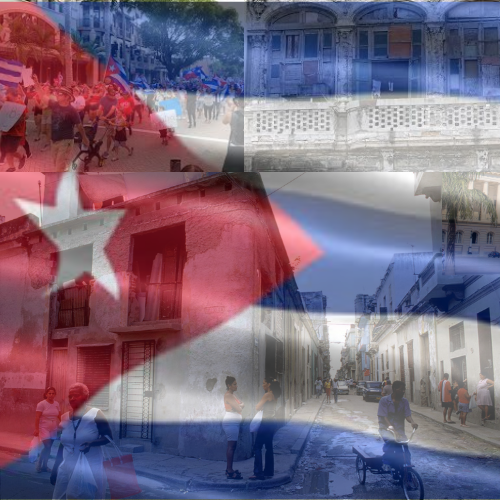




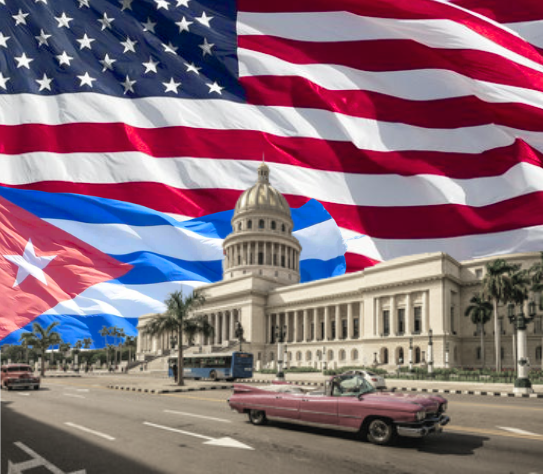
Ever since Maduro was captured by the U.S. military in January, Cuba’s political ties with the affluent, oil-rich country of Venezuela were severed. This allowed the U.S. to gain serious leverage over Cuba’s economy, not only cutting off a major source of its funds, but enacting its own blockade to essentially starve the island of its imports.
Conversations have since swirled about what Cuba’s future looks like. But all too often, these conversations lack a crucial voice: that of the Cuban people.
“Cuba needs to change,” Secretary of State Marco Rubio said. But, for him, that change can be slow. “It doesn’t have to change all at once. It doesn’t have to change from one day to the next. Everyone is mature and realistic here,” he said.
Easy words for a man who isn’t living with the implications.
Cuba’s current president, Miguel Díaz-Canel, holds both the presidency and the role of secretary-general of the Communist Party, not through election, but as a hand-picked successor. His rise is a symbol of the oppressive state of politics in Cuba.
But this didn’t begin with Díaz-Canel.
After Batista’s 1952 coup suspended constitutional protections, including freedom of speech and assembly, a band of guerrilla revolutionaries led by Fidel Castro rose to challenge him. On Jan. 1, 1959, Batista fled into exile as rebel forces overwhelmed Havana. Castro arrived to lead days later, promising elections. But those elections never came.
What did come was the beginning of a communist regime with deep ties to the Soviet Union and the beginning of a decline in diplomatic relations between Cuba and the U.S. The United States officially severed diplomatic relations with Cuba in early 1961 and, within months, came the failed Bay of Pigs invasion followed by the Cuban Missile Crisis. The two nations have been locked in a cold, bitter standoff ever since. But now, that standoff has turned into something far more dangerous.
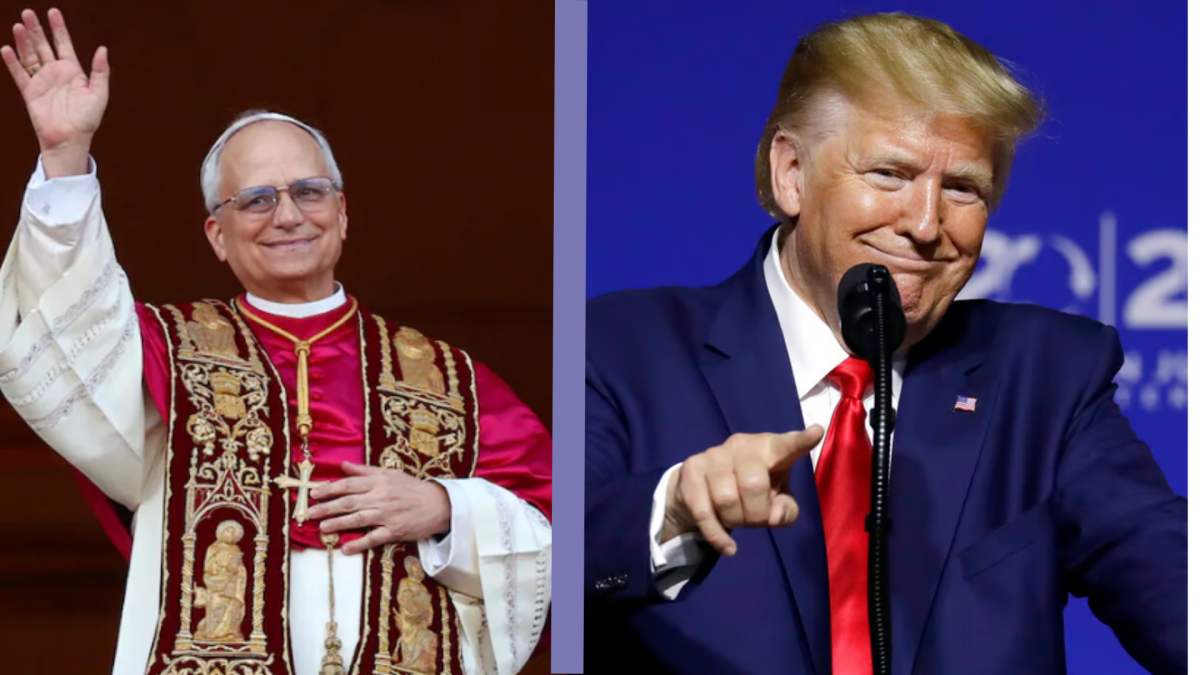
President Trump’s intervention in Venezuela and his subsequent seizure of its oil reserves ignited the question everyone in Washington was quietly asking: Is Cuba next?
Trump and Rubio insisted their indirect approach – oil blockades, economic pressure, and regional leverage, could produce regime collapse without a single shot fired. A “slow transition,” they called it, but the effects of that slowness are being felt in real time.
Trump gave an executive order in January threatening tariffs on any country supplying oil to Cuba and, since then, life on the island has “ground to a halt.” Cuba has reduced its school and work weeks. It can no longer refuel foreign airliners. Hotels sit nearly empty. The yearly Habanos Cigar Festival, a crucial source of revenue, was canceled. Mining operations have been paused. Hospitals have cut services. Trash has piled up in neighborhoods because there isn’t enough fuel to run the dump trucks. At night in Havana, the stars are visible, not because the sky is clear, but because most of the city has gone dark.
“There’s no oil, there’s no money, there’s no anything,” Trump told reporters.
Rubio provided more details: “This is a regime that has survived almost entirely on subsidies – first from the Soviet Union, then from (former Venezuelan President) Hugo Chavez…for the first time, it has no subsidies coming in from anyone, and the model has been laid bare.”
This blockade may be the gravest threat to the Cuban government’s survival since the revolution itself. And yet, for some politicians, the moment feels like triumph.
“Cuba’s day of freedom is closer than ever,” declared Representative María Elvira Salazar of Miami.
But freedom doesn’t look like power outages or children missing school because there’s no electricity to run it.
Representative Salazar herself acknowledged the impossible weight of the moment: “It’s devastating to think about a mother’s hunger, about a child who needs immediate help. No one is indifferent to that pain. But that is precisely the brutal dilemma we face as exiles: to resolve the short-term suffering or to free Cuba forever.”
It is a brutal dilemma. But it is also one where the Cuban people, the ones actually living through it, were never given a seat at the table.
For too long, Washington and Havana have let decades-old grudges dictate the terms of their relationship. This hostile stalemate has certainly not served the interests of the Cuban people; it has only deepened their hardships. The path forward demands something both governments have so far refused to attempt: building something new, rather than avoiding tension or recycling the past, and it demands what has been ignored for too long – a serious consideration of what the people in Cuba truly want. The U.S. government cannot minimize Cubans’ current suffering or ignore their hopes for the future.
Gabriel Alkon • May 8, 2026 at 9:08 am
Thank you, Camila, for this thoughtful, sensitive,and powerfully articulated reflection. You helped me to understand the painfulness and injustice of the current situation.