




Disclaimer: the author of this article is the daughter of Eliana Quero.
In 2009, Eliana Quero made the quick and difficult decision to leave her home country of Venezuela and settle in Miami. Now with Maduro imprisoned, she shares what this means for her family and remembers what life was like under the Chavez regime.
The following interview has been edited and condensed for clarity. It has been translated from Spanish.
What was your childhood like?
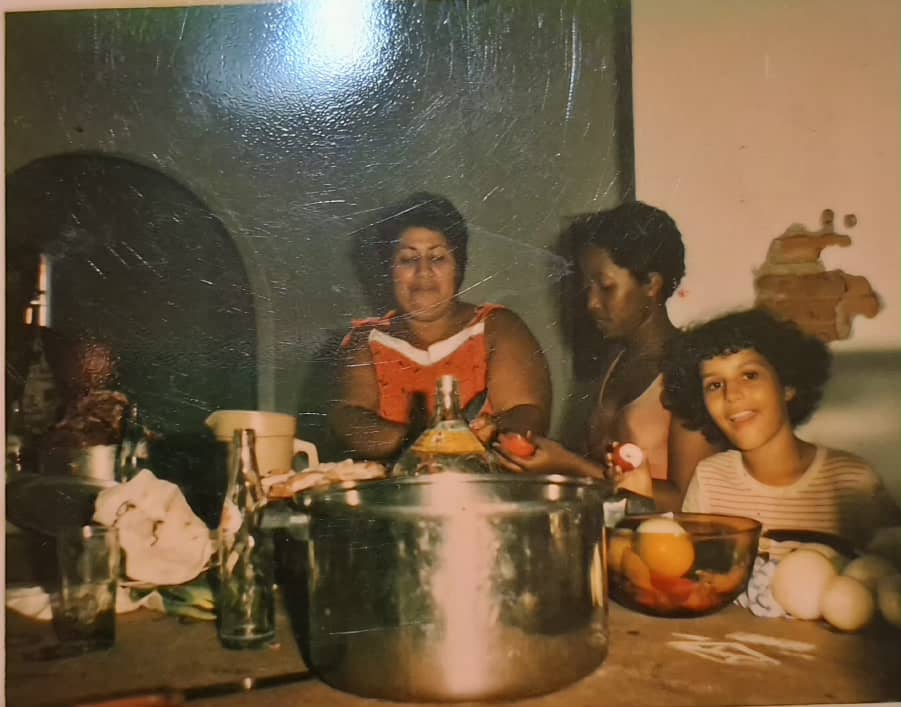
My childhood in Venezuela was tranquil. I did what all kids did during that time–played outside, and watched very little TV during the day. I had neighbors and friends I would play with outside.
What are some of your favorite memories?
Spending time with my family during Christmas, New Years, and on trips in the country during vacation with my parents and sisters. My favorite memory is going to the beach with friends my age during that time.
What were the rights and opportunities people had before Chavez?
There were lots of opportunities. All Venezuelans had always had the opportunity to study, progress, and have a good life when they put in the effort. If you were a person that had a university-related career and worked, you could always achieve the things that you wanted to. You could have good employment, access to buying a house, a car, and have a good quality of life.
After Chavez, the economy got bad because there was little trust in that political group. People’s rights started to diminish. People started having less rights to speak and communicate, and the country started deteriorating economically because there was a lot of corruption. Things stopped working correctly–education, and security system–and people had to start immigrating to other countries to look for a better quality of life.
When did you first notice things were changing in Venezuela?
When they started to imprison people without any judicial process arbitrarily because the people thought differently. They put people in prison, and there was already a lot of insecurity. People couldn’t express themselves and that had been a fundamental right for people. At that moment, things started to change drastically.
How did things change in your personal life?
My personal life changed in many ways. There was more fear to express yourself because you couldn’t speak out if you didn’t agree with what was happening in the country. This affected me personally because my husband was very opposed to the Chavez regime. He financed groups of opposition in Venezuela. This caused us to have problems, and for Chavez to target him personally for being a part of the opposition. We had to abandon Venezuela and live in the United States. We’ve been living here for 17 years.
Can you talk about coming to the United States?
It was a sudden decision that wasn’t planned. We decided to leave because the persecution of the Chavez regime became something very powerful for my family. We decided to abandon Venezuela in a very quick way, and we haven’t returned home since.
What are some things you miss about Venezuela?
Everything. I miss being able to be with my family, being able to be in the spaces in which I grew up and in which I worked. I miss all of the things that I was able to do in Venezuela that I cannot do here. I had my job, I had my plans, and my entire life in Venezuela, and it was something I had to give up from one day to the next.
What do you think of the things that have happened recently in the country?
The fact that Maduro is now in prison is a motive of joy for us as Venezuelans. For me personally, it’s the start of a possibility that Venezuela can be free again, that the regime of Chavez that started so many years ago can start to undo itself ,and that Venezuelans can return to their country of opportunities and security that we stopped having almost 26 years ago.
What is something you want people to know about Venezuela?
Venezuela is a country that has many good things. I think it’s a country that, geographically, is very well placed. It has all the best weather, good, hard-working people, and is a country of progress. It’s a country that is very enjoyable to be in, to visit, and to live in under the right conditions.
What do you hope for in the future?
I hope that Venezuela can be free and that all the people that had to abandon their country to find a better future or because they were being followed can return to their country, live happily with opportunities, and be able to be with their families.