







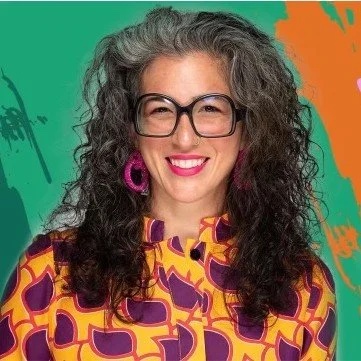
Carrollton alumna Vanessa Garcia ‘97 is a multidisciplinary writer and co-founder of the Abre Camino Collective (ACC) which is dedicated to redefining misunderstood narratives through storytelling. Among many other pieces, she has published the children’s book “What the Bread Says” (2022) and the novel “White Light” (2015); as a playwright for ACC, she wrote “The Amparo Experience” (2019). Beyond her own work, Garcia coaches aspiring writers through internships and workshops. Earlier this year, she sat down for an interview to share her passionate journey with storytelling.
The following interview has been edited and condensed for clarity.
What inspired you to start writing? Was there a specific event?
You know, I feel like I have been writing forever, but I would be remiss not to say that my grandfather for sure inspired me without directly doing it. He was always reading; he read three newspapers every morning before starting his day. Every time there was a question about anything, he’d pull a book from the shelf, and it would have a world of an answer or the beginning of more questions. I feel like that was the beginning of becoming a writer. Then, in high school, I remember sitting down and reading two writers. One was James Salter. I just read the first page of “Light Years” and was like, oh my God, writing can be like this because there’s just so much power in the imagery and the force of it, and also the softness of it.
Do you have a preferred genre of writing, and is there a common line through all of your work, regardless of the genre?
I tell stories that for a long time have been misunderstood and, once those stories get told, they can change the world. I think that telling nonfiction in that way is very entertaining. There’s a reason why my PhD ended up being in creative nonfiction. It makes you ask how you take facts and the truth and use the tools of literature to make language come alive. How do you join those together and put them into the world? I think that everything I do is based on a true story, a story that wants to hit the surface and go into the mainstream. Usually, I tell stories because I feel that they need to find a bigger audience.
What does your typical day as a writer look like? What is your writing process?
Every day has a different beat to it. Some days are company days, where we are in production; it’s essentially how we’re moving towards what we’re making. But there are two full days and two mornings of the week that I am by myself, where I am usually writing and thinking and putting together the material that ends up in those company days. It is like a push and pull between days that are fully active with meetings and the internal days like quiet little bubbles.
How do you balance work and motherhood?
Sometimes it’s crazy. Motherhood doesn’t have its own compartment; it’s all over everything, but I don’t see that as a negative. It’s such a big part of my life that it always makes its way into the heart and soul of the writing itself, and it allows for so much understanding and relatability because you’re constantly talking to other people and families.
How have the writing and producing community changed in Miami over time and how has this impacted your work?
I left Miami for the first time in 1998. At that time, it was hard to find writing groups; you really had to search. It’s very different now. O Miami didn’t exist; there wasn’t a whole month dedicated to poetry, but there was Books & Books and the Miami Book Fair, which was sort of like a pillar. Now, there is so much more. When I moved back in 2006, I was just taking a six month break from New York and figuring out what my next steps were. At that point, Miami was exploding; there was Art Basel and Wynwood. This city was constantly growing. Not just reinventing itself but expanding upon itself, and that was really exciting.
What role do writers and artists play in political activism and shaping the future?
A lot of the time, what we’re doing is getting inside of the nitty gritty, the gray and the nuance, truly digging in those places, which is what allows for a bigger conversation. I think that the core of democracy is discussion and the ability to disagree–moving towards policy, not because of agreement, but because of disagreement. Artists and writers do have a huge role in eventual policy, but I don’t think it’s the first or singular goal; it’s kind of like the end product. When we tell stories in a complicated way, we don’t have an agenda. For me there isn’t an agenda except truth; truth is the agenda.
How did Carrollton and its goals shape you as a writer?
I do believe that love conquers all, and I believe that the goals of the Sacred Heart are essential to my thought process. Intellect is balanced with love and community, and these things speak to each other. All of this was very much nurtured at Carrollton and a part of who I am. I am a Sacred Heart girl.
What advice would you give to people interested in storytelling?
I think storytelling is everywhere. There are so many ways that you can be a storyteller without spending your time sitting and writing a novel–it’s everywhere. I think one of the things that people are afraid of right now is the AI revolution, but more than ever, they’re going to need us because the ability that storytellers have to move around variables is a very unique skillset. Being human is a very different skillset than AI, and I don’t think that we should feel threatened by it. If storytelling is a thing you really want to pursue, then the question is how do you do that in the world? I think that’s a big question, and it’s something worth asking early so that you can craft a life around it.
Emma S • Apr 15, 2026 at 5:08 pm
Wow! Very insightful. I loved reading this <3