











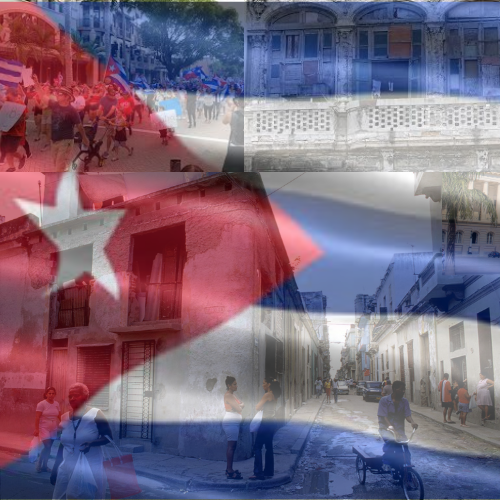
After the United States arrested Venezuelan leader Nicolas Maduro back in January, it turned its sights on pressuring regime change in Cuba, a country with a long history of difficult economic and political situations and an oppressive government.
Earlier this month, The Beat reported on the history of Cuba’s government, its relationship with the United states, as well as the U.S.’s decision to enforce a blockade on Cuba, stopping supplies and oil from reaching the island in order to force regime change and negotiation.
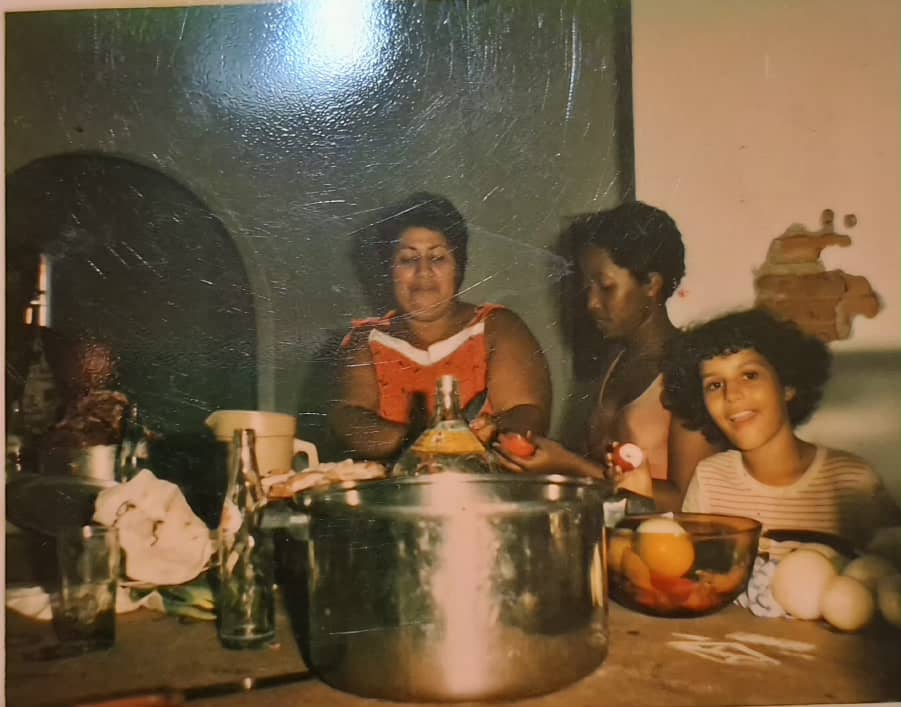
In order to get a better glimpse of life in Cuba today, I interviewed a woman in her 50s living in Havana. We spoke over the phone, and she asked that her name not be shared due to fear of retribution from the government.
The following interview has been edited and condensed for clarity. It has been translated from Spanish.
What is the main reason you do not want your name to be used?
I appreciate you not using my name because of the significant oppression that exists in this country, especially when there is a face or a name associated with commentary. The environment has worsened, and people avoid exposing themselves in any situation.
When did the situation began to worsen?
It got worse here after the reordering [in 2021] when they changed the salary of workers [1]. It was a disaster overall, affecting the majority of the population.
Why do you believe this was a disaster?
Because on the surface the government raised salaries, but it tripled or increased by seven times the cost of essential products, which means that all of us were exposed to inflation, while still having very low salaries. Because even though the salaries were raised, they were still lower than the cost of the goods needed to survive. Life in Cuba has worsened significantly.
What is one problem that has worsened after the most recent blockade?
There has been a significant increase in begging and homelessness. Demonstrations in the streets in different districts have increased like never before. In Havana, but also in different provinces, there have been strikes because of everything that we are living through.
Is there another problem that has worsened?
[In this kind of environment] you end up with problems with things like transportation, and then people are exposed on the streets, and the violence has increased.
Speaking of transportation, how do you get to work every day?
I get to work on a small bicimoto that I share with my husband. It’s a one-person motorcycle and isn’t meant for two people, but we use it anyway because it’s for only a short period of time, and we use the side streets.
How often do you get blackouts?
We no longer live with periods of blackouts, we live in periods with light ups. This means that only two to three hours of a day has electricity. Sometimes there are up to 30 hours without electricity. This has been happening for a while.
Are there ways to get enough money?
Some people have found a way to earn more money because of their experience and talent, but that is because those that can have a special dispensation get a state salary. With a regular salary, you don’t have enough to have a carton of eggs a month…or a bottle of oil a month. We have to find other ways to earn money. That’s what we refer to in Cuba as “fighting and inventing” to have the resources needed to survive. In Cuba now, a large part of life is just surviving.
[Given that the salaries are so low, when asked about what other things people do to make enough money, she said she would rather not provide details in order protect people.]
What is one last thing you would like to say?
I know that life is beautiful, that my life is beautiful, despite everything around me in Cuba. At this time, Cubans live under our thoughts and in our sufferings.
_____________________
[1] In 2021, Cuba abolished its two-currency system, which consisted of the national peso (CUP) used by locals, and the convertible peso (CUC), used by foreign investors and tourists, valued much higher than the CUP, and connected to the U.S. dollar. As a part of its monetary restructuring process, the government also raised salaries for state employees. According to Columbia Law School, this reordering caused “higher inflation, a loss of purchasing power of the peso, and new distortions in relative prices. The financial crisis worsened…”
Maky • Jun 3, 2026 at 11:08 am
Thank you for this eye opening article about the real plight of living under a communist regime. While many are clueless of the situation, your piece awakens with a raw truth that is undeniable.
Maria Isabel Cordova • May 28, 2026 at 7:30 am
Thank you for this story.
So many people in the world see Cuba as a tourist destination,driving 50″s viantage cars. They avoid seeing the reality and finding out the truth.
I remmber as a little girl the day that Casto and his “guerillerlos” paraded in Havana. I knew that my life was about to change. And yes, one year later my family fled Havana my parents never saw the country of their birth ever again