




























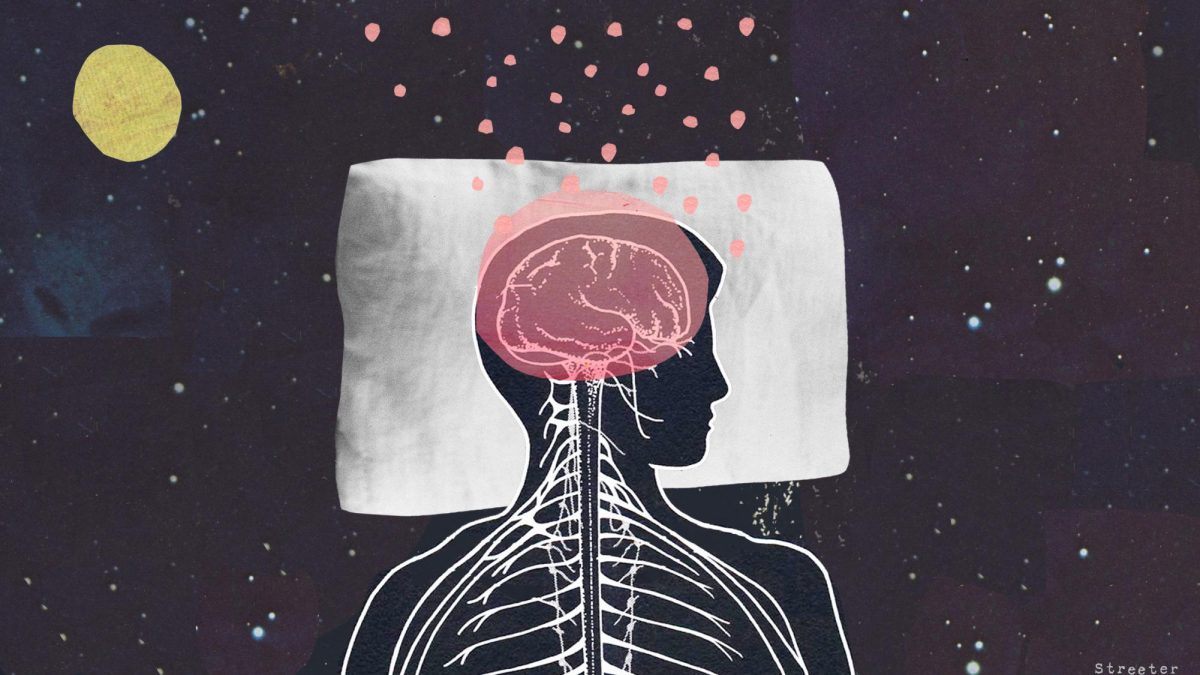
You may have heard of the theory that multiple universes, realities, and dimensions exist. Theories of alternate dimensions, or the multiverse suggest that our universe is just one of many, potentially infinite, universes existing alongside each other. Quantum immortality, also known as the “Many Worlds Interpretation,” was first proposed by Hugh Everett in 1957 and is the idea that in a universe where every possible outcome happens, people only experience versions of reality where they survive, so from an individual’s point of view, he or she never dies. In simpler terms, after “death,” consciousness travels to another dimension or alternate reality. Imagine you’re walking on a street, and a car almost hits you. According to quantum immortality, in one dimension, you would be killed by the car, but for you, it would seem as though you survived.
In order to understand the idea of multiple states of existence, many scientists point to Schrodinger’s cat, a thought experiment. This idea imagines that a cat is placed in a box with rat poison. With the box closed, there is, hypothetically, a 50% chance that the cat is dead and a 50% chance it is alive. Until the box is opened, the cat is both dead and alive simultaneously. This illustrates the concept of quantum superposition, the idea that particles can exist in multiple states until observed.
However, while according to quantum immortality, the universe is split into two realities much like the cat’s state of being, the Copenhagen Interpretation developed by Niels Bohr asserts that the cat would actually collapse into one state, dead or alive, instead of branching off into different states of reality.
I’ve always been interested in the idea of quantum immortality and understanding the thousands of possibilities that could answer the complex truths of the universe, but when I asked some of my classmates to see if they were familiar with quantum immortality, many were unaware of the idea.
“I haven’t heard of quantum immortality, but I know what quantum physics is, and it seems really interesting,” said Isabella Prado ‘28.
Others knew a little bit. “I have heard of Schrodinger’s Cat,” said Miranda Quimper ‘28. “There is so much we can learn about,”
One important point to consider is how this theory supports or contradicts religious views about the soul and immortality. Carrollton school chaplain Father Vallee spoke about the mystery and unanswered questions regarding the afterlife. “Jesus tells us that we will live forever, but not how,” he said. “We don’t know how it works. Quantum immortality is possible, but it has a problem–it’s theoretical and can’t be scientific. Even if it’s true,” he said, “we have no access to what happens after we die. It remains an interesting theory. It doesn’t conflict with Christianity because all Jesus tells us is that we will live forever, not how.”
Overall, Father Vallee believes that there is a false idea that religion and science are inherently opposed to one another. “People think science gives us facts–it gives us theories that are challenged to be falsified,” he said. “There is no conflict between good religion and good science.”


Ainhoa Bailon • May 14, 2026 at 6:12 pm
Good job!!!!
Isabella Prado • May 14, 2026 at 4:05 pm
This is super interesting!!