


























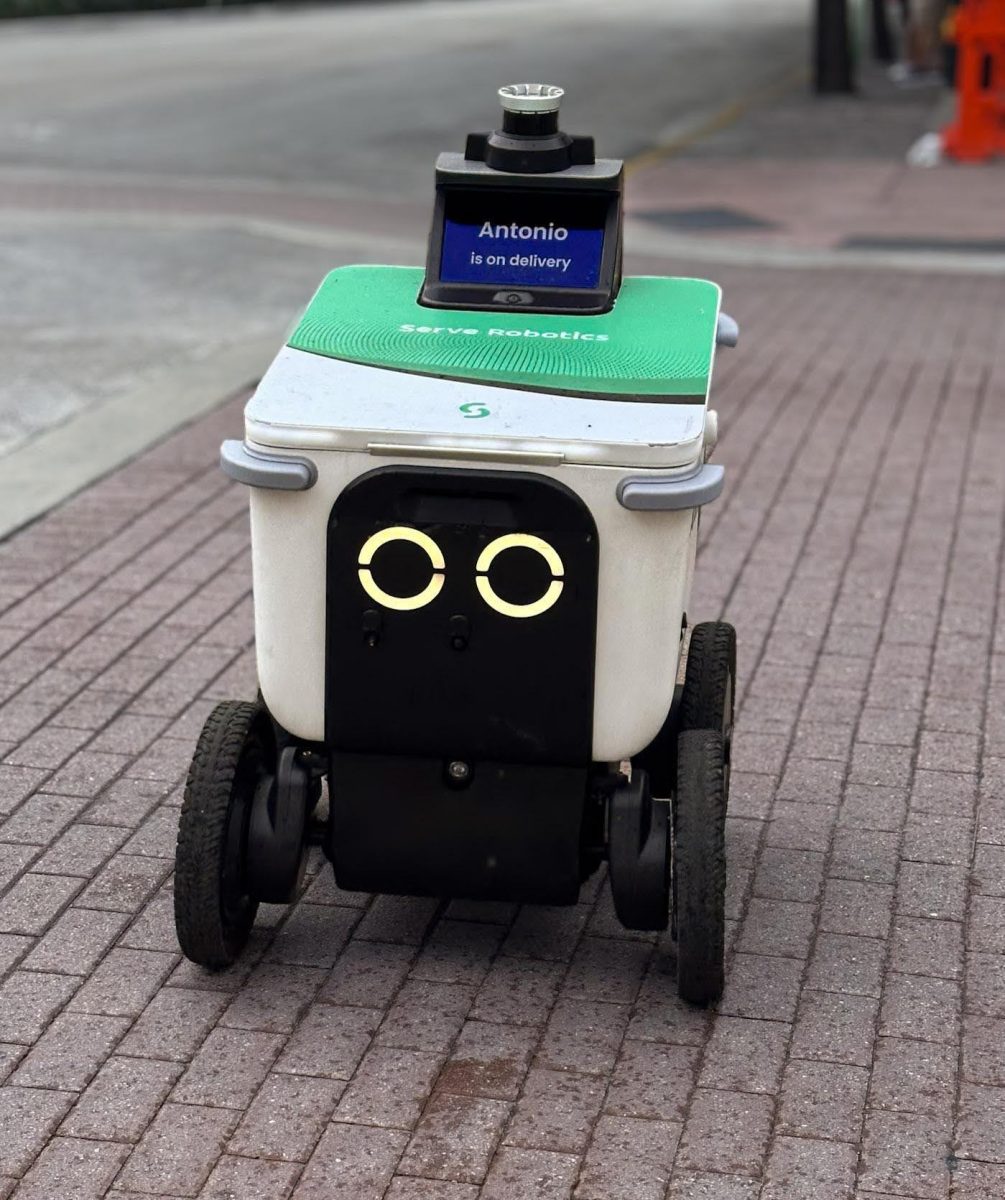
In 2026, self-driving robots are continuing to rise in popularity and can now be seen all around Miami. From being run over by the Brightline to getting stuck on sidewalks, they have generated controversy. While there are many advocates in favor of these robots, others have voiced concerns about their effectiveness and whether or not they are taking jobs from delivery drivers.
According to Caplin News, “In early 2025, Serve Robotics partnered with Uber Eats to deploy up to 2,000 robots. Since its launch in 2020, the company has completed more than 500,000 deliveries.” While impressive for companies such as Serve Robotics, these are delivery opportunities that have been taken away from hard working individuals who rely on apps such as Uber Eats to make money.
Many Carrollton students shared this exact concern. “I hate them,” said Emma Avino ‘27. “I think it’s stripping people of their jobs.”
Even delivery drivers who continue to work, have begun to see a decline in business. According to newo.ai, “Drivers like José Torres and Modesto Espinal saw their average weekly earnings plunge—from about $650 per week to roughly $240 in some cases—as fewer restaurants remain open and competition from robots intensifies.” The current amount that Espinal is making averages out to $11,520 per year which is far below the federal poverty line of $15,960 for one individual.
Unfortunately, when it comes to self-driving delivery robots, job security is not the only complaint: delivery robots are only able to be operated in dense urban areas as lack of infrastructure and the need to be charged daily can make them inefficient in rural areas. In Miami, Brickell residents have shared complaints about the robots increasing traffic. There have also been safety concerns regarding their ability to make space for emergency vehicles, such as ambulances.
Another issue is that these robots still struggle to get around and frequently fall over or get stuck. This leads to delivery delays and spilled food. This has led to more people questioning the effectiveness of these robot delivery drivers.