

































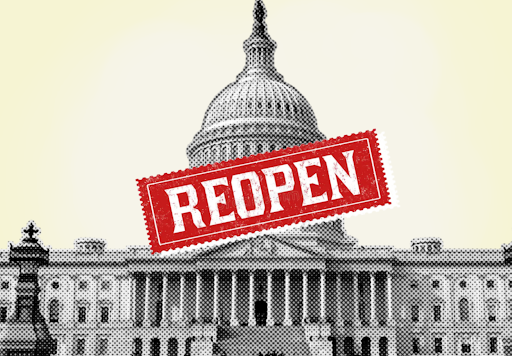
After 43 days of political gridlock, the longest shutdown in United States history came to an end on Nov. 12. The House passed its 328-page bill with a vote of 222 to 209. The package had already cleared the Senate two days earlier.
President Donald Trump quickly signed the bill into law, officially ending the shutdown. The bill extended funding to most federal agencies, but bringing the government back to full operation has been a gradual process.
Democrats had sustained the shutdown largely to demand an extension of ACA subsidies, which help millions of Americans afford healthcare premiums. However, the bill did not guarantee the extension that Democrats wanted, leaving uncertainty over what will happen next.
The tax credits are set to expire at the end of the year and, without an extension or another solution, millions of Americans could face rapidly rising healthcare costs. Just today, the Senate voted down two healthcare bills–one proposed by Democrats that would have extended the subsidies for three more years, and one from Republicans, which would have provided a health savings account for people earning less than 700 percent of the federal poverty level instead of extending the tax credits.
With negotiations in the works, Americans are left waiting to see the future of healthcare. While the shutdown may have ended, its unresolved core issue remains, and the political battle is far from over.