





















Recently, there has been an upsurge in political violence in the U.S.
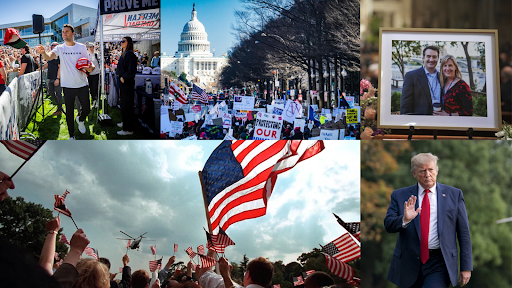
Many are aware that a religious conservative activist, Charlie Kirk, was fatally shot in September while addressing an audience of students at Utah Valley University. However, there have also been many other cases. On Sept. 24, a man opened fire in the Dallas ICE center, killing two detainees and himself. Last year, President Trump was nearly assassinated during a campaign rally, and a Minnesota state representative and her husband were fatally shot in their home on June 14.
Political violence goes against the values of democracy. According to an article by Durham University, which discusses the history of democracy in Athens, “democracies shun violence …[and] prefer non-violent forms of conflict resolution.” In the United States, the Founding Fathers took this idea and made freedom of speech a fundamental right. However, there certainly have been times of political violence and unrest in our nation’s history, most notably during the Civil War and the Civil Rights Movement, and it is essential to recognize that political violence is not a new thing.
One of the factors that makes this time unique is the existence of social media. According to PBS News, “experts point to several sources [causes of increased violence], including social media.”
People with extreme voices and opinions usually tend to go viral on these platforms because they get more reactions, and according to one expert, “its algorithms and business models have been shown to exacerbate outrage and anger.”
Since social media is anonymous, it allows individuals to say awful things about people online with little to no consequence. According to the student newspaper at Washington College, “anonymity proves to be a slippery slope that makes dangerous rhetoric more tempting to espouse without a looming threat of ramification.”
Social media can spread lies and slander, building resentment towards a particular person, group, or institution. According to Carrollton school chaplain Fr. Vallee, a social media user or politician “can be caught in a lie, and it doesn’t matter–all that matters is that it’s clickbait for that day.”
While the causes of political violence are complex, social media is a contributor. It can cause people to feel more polarized than they actually are because of what they are seeing online. According to an article published on the Carnegie Endowment for International Peace website, “affective [emotional] polarization…is probably contributing to an environment that allows politicians and opinion leaders to increase violence targeted at politicians, election officials, women, and many types of minorities.”
But political violence is sometimes more about mental health than ideology. According to the same article, “The strongest correlation with committing any form of violence is having poor self-control.” While many believe political violence is planned in advance, “most violent acts that occur at political events or hate crimes are…likely spontaneous, impulsive decisions.”
With complex causes and continued acts of violence, it can be easy to be discouraged and give up hope, but at Carrollton, Catholic values provide a guide for how to work for healing and peace.
The word Catholic means universal, and Catholics are called to rise above polarizing intolerance. “You can’t be universal unless you’re tolerant of people who disagree with you,” said Fr. Vallee.
By definition, the Catholic Church says that the Church is for all people, not just a certain group. “When people can fully grasp this concept, the world can be at peace,” said Nathalie Rosso ‘31.
“Peace is important to Catholics, and they believe that it’s their job to work towards [it],” said Fr. Vallee. Doing this involves making the world a better place. “If you want peace, work for justice,” said Pope Paul VI during his speech on the World Day for Peace.
And at Carrollton, this is stated in one of our five goals, Goal III: “The school, drawing from Catholic Social Teaching, educates students to analyze and work to eradicate social structures, practices, systems, and values that perpetuate racism and other injustices.”
If everything is just, the world will be more harmonious.