






















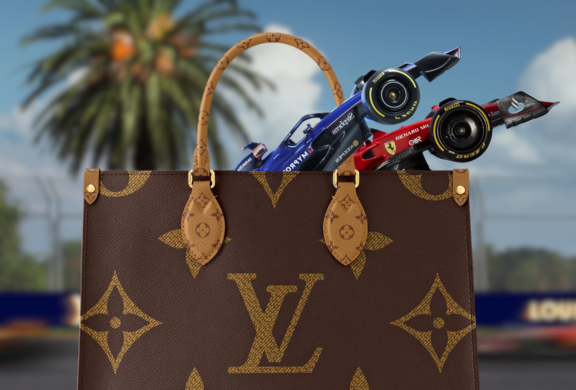
On Oct. 2, 2024, Louis Vuitton Moët Hennessy (LVMH) announced its partnership with Formula 1, marking a new chapter in the intersection of sports and fashion.
Formula 1 is often seen as the pinnacle of motorsports, the most elite league where the best drivers in the world demonstrate their talent. Founded in 1950, it has gone through an abundance of ownership changes, the most recent being the Liberty Media acquisition in 2016.
Since this acquisition, Formula 1 has grown significantly in popularity, most notably among women. This popularity comes mainly from its docu-series “Drive to Survive.” F1 went from being a pure-racing sport to a global entertainment brand heavily focused on hospitality and branding. Additionally, its races in lavish destinations such as the Monaco Grand Prix, the Las Vegas Grand Prix and the Miami Grand Prix, have transformed F1 weekends into high-society spectacles, attracting the world’s most elite fans.
In this new era, Formula 1 is as much about culture as it is about competition. The Grand Prixs have become events of influence, wealth, and exclusivity. The paddocks have become a runway where even the wives and girlfriends of the drivers (WAGS) dress in high fashion that pertains to the region of the race, drawing attention to culture as well as fashion.
LVMH, founded in 1987 with the merging of Moët Hennessy and Louis Vuitton, is a leader in the luxury goods industry, owning over 75 luxury brands. If Formula 1 represents the pinnacle of motorsports, LVMH represents the height of luxury, making their collaboration inevitably successful.
The partnership includes three of LVMH’s most iconic brands: Moët & Chandon, symbolizing celebration and hospitality; TAG Heuer, serving as the official timekeeper; and Louis Vuitton, designing trophy trunks for the Australian Grand Prix. Together, these brands have helped draw an entirely new audience to Formula 1: the fashion community.
For Formula 1, LVMH’s newfound involvement reinforces the transition from just a sport to a lifestyle. By partnering with a symbol of high culture, F1 has gained legitimacy within the luxury world beyond just racing enthusiasts. And for LVMH, the partnership offers access to a vast new market in the Middle East, Asia and the United States. Additionally, F1’s growing popularity among younger crowds aligns with LVMH’s desire to modernize its image and expand its popularity with younger, more tech-savvy masses while staying true to the brand’s roots.
For many, the growing popularity of F1 is seen as an advantage for the industry, the collaboration with LVMH only helping them grow. Other die-hard fans, however, complain that the sport has become too focused on image, replacing iconic historical circuits such as the Imola and Dutch Grand Prix for the luxury and prestige of tracks in Miami and Las Vegas. This raises the question: Can Formula 1 remain true to its soul while expanding its image towards luxury?
Diana Sudasassi • Nov 19, 2025 at 7:59 am
Very well written article Bella! Formula 1 was always known but not to the level of popularity it has received in the last decade – no doubt due to the luxury branding being married to it. Well done!