
































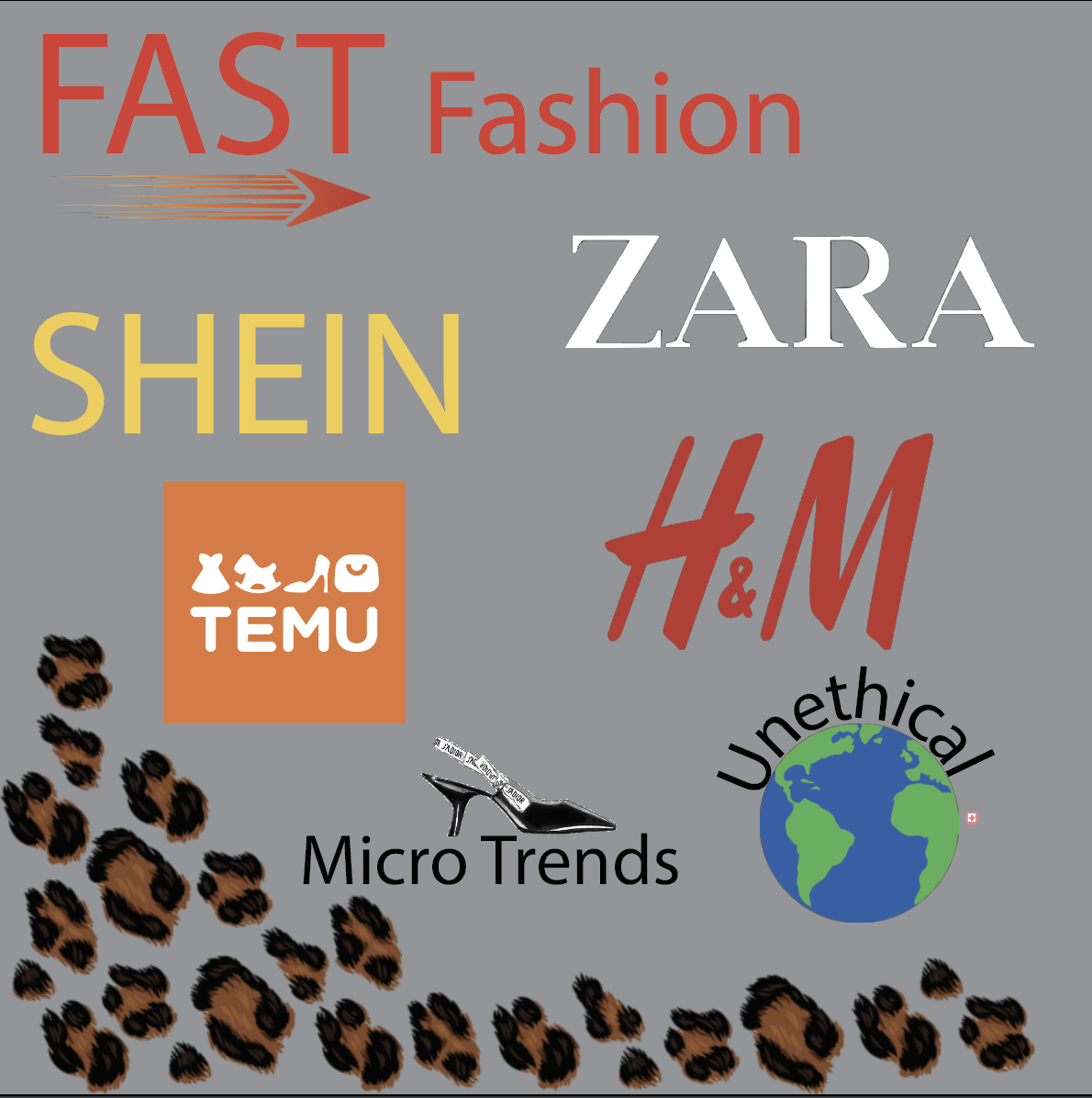



Fast fashion is the mass production of inexpensive clothes according to the latest fashion trends, but its effects on the environment are often ignored. The practice of fast fashion mainly affects water, microplastics, and energy. Also, since the latest clothing trends are constantly changing, consumers often throw away clothes that are “out of style,” contributing to buildup in landfills.
Water
The production of cheap clothing uses large quantities of water, depriving people of water that they need for their everyday lives. To make a single cotton shirt, nearly 700 gallons of water are needed, and 2,000 gallons are used to make a pair of jeans.
An exorbitant amount of water is also needed for cotton farming, and since there is an increasing demand for cotton in fast fashion, pesticides are used to speed up the process. These chemicals are detrimental to the soil and pollute nearby water sources.
The process of dyeing clothing also affects the water supply because the leftover water that isn’t used is thrown into rivers and seeps into groundwater. This leftover water is contaminated with chemicals, harming wildlife in rivers as well as crops that are sustained by groundwater.
Microplastics
Because fast fashion consists of clothing that is made of non-biodegradable materials such as polyester and spandex, about 35% of all microplastics, small pieces of plastic that are not biodegradable, in the ocean come from fast fashion clothing.
Buildup in landfills
The average American gets rid of 82 pounds of fabrics every year. This is extremely harmful to the environment because non-biodegradable fabrics build up in landfills and contaminate the habitats of animals.
Global warming
The process of making synthetic fiber requires the mass burning of fossil fuels, contributing to the accumulation of greenhouse gases in the atmosphere. In fact, 10% of the total carbon dioxide in the atmosphere throughout the world is caused by the production of fast fashion clothing. The increase of carbon dioxide in the atmosphere is harmful because it traps heat, causing global warming.
Buying clothes made from biodegradable materials and shopping at thrift stores can reduce harm to the environment.


Bella Guitian • Nov 17, 2025 at 11:54 am
Awesome article Nati!!