


































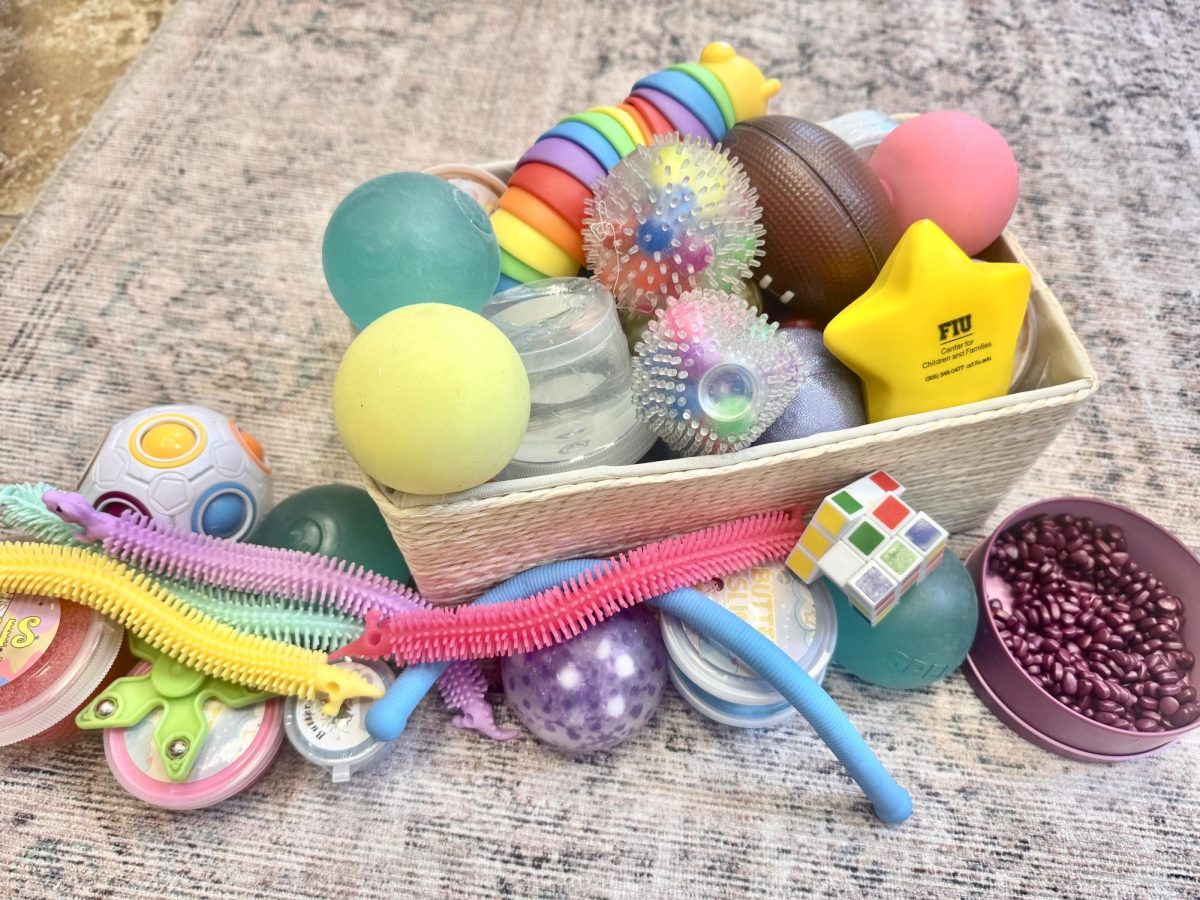
Almost all classrooms at Carrollton have something new: a small bin full of fidget toys. Whether it’s a squishy ball, a fidget cube, or stretchy slime, students are using them during class. Sitting in a chair quietly and listening for long hours on end is not easy for some people. Brains tend to wander, legs bounce, and concentration is lost. Giving our hands something small to do like squishing a stress ball or clicking a fidget cube, can be really impactful. What began as a trend for kids in 2020 is now becoming a regular part of our learning environment, and the science behind it is solid.
Connection to the brain
According to Health Central, fidgets positively impact students’ brains by improving focus, helping students stay calm, and providing them with tools to manage stress better. Small hand movements help stimulate the prefrontal cortex, which is the part of the brain that controls decision-making and attention. They help your brain stay alert but not distracted. Instead of tapping pencils or doodling, students who have a difficult time paying attention are able to listen more effectively when they work with a fidget toy. This is because they stay in engaged with the lesson.
Stress Management
Another reason fidget toys are used in classrooms is because they help students manage stress in real time. When students are anxious about a test or overwhelmed by homework, their bodies release a chemical called cortisol, which makes the heart race and muscles tighten up. Doing something repetitive and physical, like squeezing a stress ball, actually helps the body relax. Researchers say that this kind of movement engages the parasympathetic nervous system, which calms down the body and lowers stress levels. Through the consistent use of these fidget toys, the brain starts shifting into a more relaxed mindset within minutes. Many students find themselves clearer and less tense after.
Sensory Activation
Stress toys activate the senses, especially the sense of touch. Senses play an important role in the way people concentrate and manage feelings, and touch is one of the strongest. The feeling of varying textures, such as bumps, smoothness, or softness, gives the brain something to focus on. This can center students during long lessons or high-pressure situations. Additionally, this is significantly helpful for easily overwhelmed or sensory-sensitive students, such as those who have autism or anxiety. By giving their senses something small and soothing to focus on, stress toys enable students to relax and be more focused in class.
Potential for distraction
Of course, not everyone thinks stress toys belong in classrooms. Some think they’re just a distraction or that students will misuse them. Sometimes students might focus more on the toy than the lesson or start playing with it in ways that draw attention from others. It’s true that that can happen. However, research shows that when used effectively and quietly, fidget toys actually enhance focus in the majority of students. In fact, experts say that when students are in noisy or overstimulating environments, providing a quiet, low-effort fidget can serve as a “compensatory mechanism” to redirect restlessness and improve attention.
Overall, fidget toys are a simple solution based on real brain science. They calm the body and fulfill sensory needs while improving attention and learning. As Emilia Borges ’27 stated, “It’s sometimes the small things, like a fidget toy, that have the most positive effect on my learning and focus in the classroom settings”.



Sienna de Zarraga • Nov 13, 2025 at 9:38 pm
This is so relatable!! Amazing!
Sol Lucia • Nov 13, 2025 at 9:15 am
This is wonderful!
Jojo Salazar • Nov 13, 2025 at 8:49 am
This is a great article!! Very relatable
Alana Fernandez • Nov 12, 2025 at 9:28 pm
Amazing article! Love this! Fidget toys are such a great way to help students focus and manage stress. It’s amazing how something so simple can make a big difference in the classroom! ☺️☺️
Michelle Vigoa • Nov 12, 2025 at 12:42 pm
What a great article !!! The fact that I teach a lot of the biology and sensation topics you mentioned, and yet I learned how to make my instruction more relatable to my students because of your article, is awesome !!! Great job, girls.